
Moving Intelligence to the Source
The Shift to Instantaneous On-Vehicle Processing
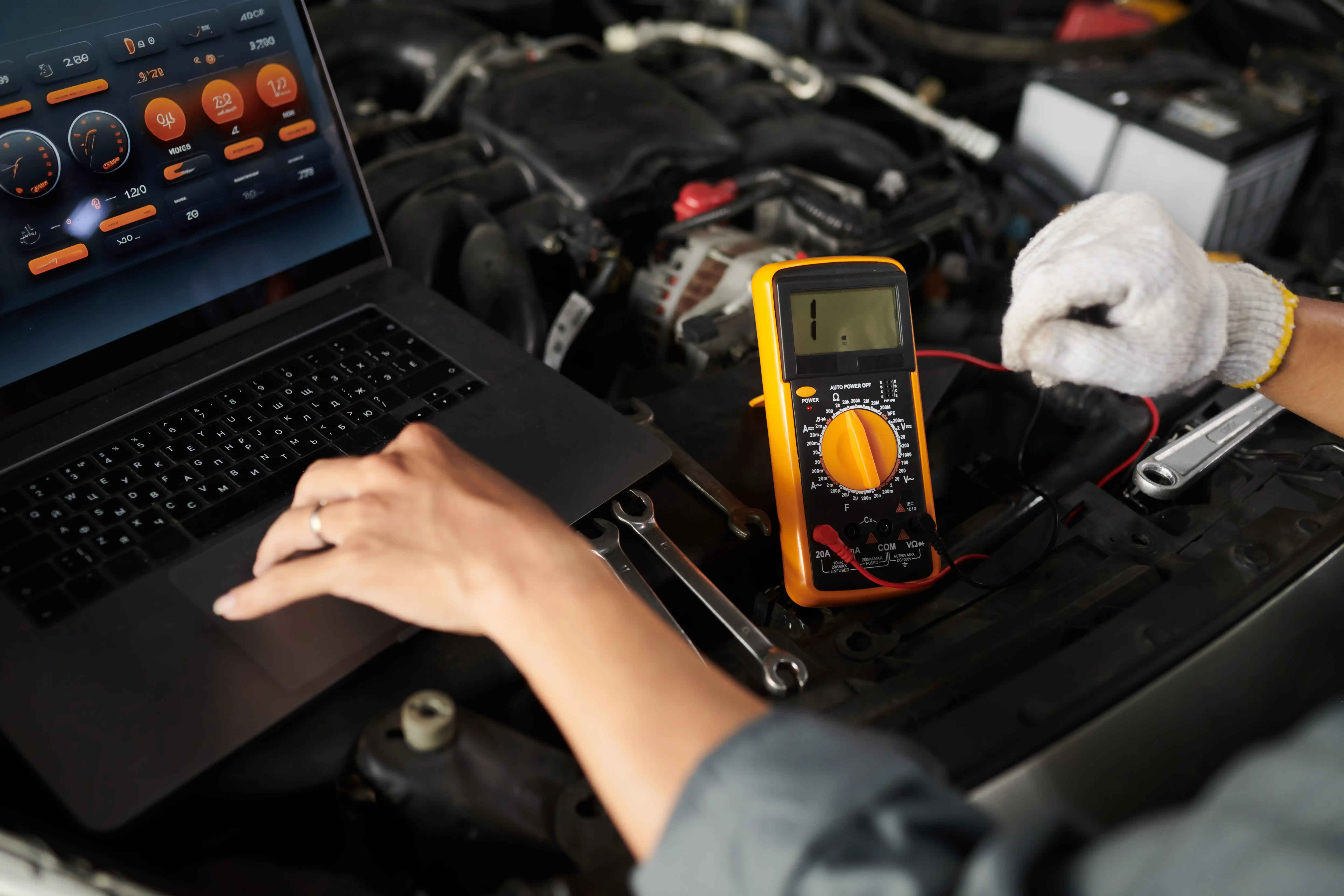
Electric vehicles (EVs) differ fundamentally from their internal combustion predecessors, acting less like mechanical beasts and more like sophisticated computers on wheels. A modern EV is essentially a dense cluster of sensors, continuously generating streams of data regarding battery chemistry, motor rotation speeds, tire pressure, and precise geolocation. The critical challenge for the next generation of automotive engineering is not just collecting this data, but processing it without delay. In the past, data was often stored and offloaded later, or sent to a central server for analysis, which introduced latency. Today, the industry is pivoting toward processing data right where it is generated—within the vehicle itself.
This approach utilizes high-performance chips embedded directly in the car's architecture to analyze information in milliseconds. By reducing the reliance on external communication networks, the vehicle can detect anomalies the moment they occur. For instance, a sudden, micro-second fluctuation in voltage or a slight irregularity in motor torque might be invisible to a human driver and too fast for a cloud server to catch in real-time. However, onboard processors can identify these minute deviations instantly. This capability transforms the vehicle from a passive machine into an active participant in its own health management, capable of flagging issues long before they manifest as physical breakdowns or dashboard warning lights. This autonomy is particularly vital in areas with unstable internet connectivity, ensuring that the vehicle's diagnostic capabilities remain robust regardless of location.
| Feature Comparison | Traditional Diagnostic Approach | Modern On-Vehicle Processing |
|---|---|---|
| Response Time | Delayed (requires shop visit or data upload) | Instantaneous (milliseconds) |
| Data Granularity | Snapshot-based (periodic checks) | Continuous stream (real-time) |
| Dependency | Relies heavily on external tools/servers | Autonomous operation via onboard chips |
| Issue Detection | Identifies existing failures | Identifies developing anomalies |
Virtual Sensing and Internal State Estimation
One of the most innovative breakthroughs in EV diagnostics is the ability to visualize the internal state of components that are physically inaccessible. In an electric motor or a high-voltage battery pack, installing physical temperature or stress sensors at every critical point is often impossible due to space constraints, cost, and structural integrity concerns. Yet, knowing the precise temperature inside a rotor or the stress on a specific battery cell is crucial for safety and longevity. Engineers have solved this by deploying "virtual sensors"—sophisticated mathematical models that run on the vehicle's computer.
These models utilize accessible data points, such as external temperature, current flow, and voltage output, to calculate the internal conditions with remarkable precision. It is a form of digital deduction; by understanding the physics of the components, the software can infer that if X current flows for Y seconds at Z ambient temperature, the internal core temperature must be rising to a specific level. This allows the system to predict overheating or mechanical stress before it physically damages the hardware. Instead of waiting for a component to fail, the system can dynamically adjust power output or cooling strategies to mitigate the risk. This transition from physical measurement to computational estimation not only saves costs on hardware but also extends the operational life of the vehicle by preventing the kind of invisible wear and tear that leads to catastrophic failure.
The Symbiosis of Virtual and Physical Realms
Digital Twins and Cloud-Based Simulation
While onboard processing handles immediate reactions, the cloud serves as the brain for deep, long-term analysis. This is where the concept of the "Digital Twin" revolutionizes maintenance. A Digital Twin is a virtual replica of a specific physical vehicle, maintained in the cloud. As the real car drives, it sends detailed telemetry to its virtual counterpart, allowing the system to mirror the car's exact condition in a digital environment. This technology allows engineers and algorithms to run complex simulations that would be impossible to perform on the vehicle's internal computer.
For example, the system can simulate how a specific battery pack will degrade over the next 50,000 miles based on the driver's unique acceleration habits and local climate conditions. It enables a shift from standardized maintenance schedules to personalized care. If the Digital Twin predicts that a specific component is under unusual stress, the system can alert the owner to service that specific part well before a standard check-up. This method effectively separates the signal from the noise, identifying true mechanical risks amidst terabytes of routine data. Furthermore, because the heavy computational lifting happens in the cloud, the vehicle keeps its processing power focused on safety and driving tasks, while the cloud processes historical trends and complex wear-and-tear scenarios.
Collective Learning and Fleet Optimization
The true power of modern diagnostics lies in the network effect. Individual vehicles no longer learn in isolation; they contribute to a collective intelligence that improves the entire fleet. When one vehicle encounters a rare anomaly—such as a specific error caused by a unique combination of extreme cold and a specific charging station voltage—that data is anonymized and analyzed in the cloud. Once the root cause is identified and a software solution is developed, the fix can be deployed to every other vehicle in the fleet via over-the-air (OTA) updates.
This creates a self-improving ecosystem. A problem encountered by a driver in Norway can result in a preventative update for a driver in Canada the very next day. This "hive mind" approach is particularly valuable for refining energy efficiency and thermal management strategies. If the aggregate data shows that a certain driving mode causes unnecessary battery drain on hilly terrain, the control logic can be optimized and redistributed to all cars. This continuous loop of data collection, analysis, and software refinement ensures that an EV bought today becomes smarter and more reliable over time, rather than degrading. It transforms the ownership experience from managing a depreciating asset to engaging with an evolving technology platform.
Ensuring Transparency and Trust
Lifecycle Tracking and Infrastructure Integration
As the EV ecosystem matures, the scope of diagnostics is expanding beyond the vehicle itself to include the charging infrastructure and the broader lifecycle of critical components. Modern diagnostic systems now engage in a digital "handshake" with charging stations. When a car plugs in, the system assesses not just the battery's ability to accept a charge, but also the health of the charger itself. This bidirectional diagnosis can instantly determine if a slow charge is due to a cold battery or a faulty grid connection, saving users from frustration and wasted time.
Furthermore, the industry is moving toward immutable transparency regarding battery health, often utilizing distributed ledger technologies similar to blockchain. This creates a "Battery Passport" that records every significant event in a battery's life—charging cycles, thermal stress events, and deep discharges—in a way that cannot be tampered with. For the used car market, this is a game-changer. Instead of guessing the remaining life of an EV's most expensive component, a buyer can access a verified digital certificate of health. This transparency underpins the residual value of electric vehicles and builds consumer trust, ensuring that the transition to electric mobility is supported by reliable, verifiable data from the factory floor to the scrapyard.
| User Scenario | Diagnostic Benefit | Outcome |
|---|---|---|
| Daily Commuter | Real-time range adjustment based on battery health | No range anxiety; accurate trip planning |
| Used Car Buyer | Access to immutable "Battery Passport" history | Verified purchase; transparent asset value |
| Fleet Manager | Predictive alerts for specific component fatigue | Reduced downtime; optimized maintenance scheduling |
| Charging Network | Automated handshake diagnostics upon plug-in | Faster charging sessions; quick identification of faulty stalls |
Q&A
-
What is Onboard Fault Prediction and how does it benefit modern vehicles?
Onboard Fault Prediction involves using advanced algorithms and data analytics within a vehicle to predict potential faults before they occur. This technology enhances vehicle safety and reliability by allowing for proactive maintenance, reducing the risk of unexpected breakdowns, and ultimately saving costs associated with emergency repairs.
-
How does Remote Error Code Analysis improve maintenance efficiency?
Remote Error Code Analysis allows technicians to access and interpret vehicle error codes from a distance, without needing physical access to the vehicle. This enables quicker diagnostics, reduces downtime, and can guide owners on necessary actions, improving overall maintenance efficiency and customer satisfaction.
-
What role does Edge Based Health Monitoring play in industrial machinery?
Edge Based Health Monitoring involves placing data processing capabilities close to the machinery itself, enabling real-time monitoring and analysis of its health. This approach minimizes latency, enhances data privacy, and allows for immediate response to potential issues, thus extending the machinery's operational life and preventing costly failures.
-
Why is Sensor Drift Detection important in data collection systems?
Sensor Drift Detection is crucial because it identifies when a sensor's output starts deviating from its expected range due to factors like aging or environmental changes. Detecting and correcting sensor drift ensures the accuracy and reliability of data collected, which is vital for maintaining the integrity of any data-driven system.
-
How do Self Learning Diagnostic Models contribute to system maintenance?
Self Learning Diagnostic Models leverage machine learning to continuously analyze system performance and adapt to new patterns or anomalies. This allows for more accurate diagnostics over time, as the models improve with each interaction, leading to more effective predictive maintenance and reduced downtime.
-
What are System Degradation Alerts and how do they assist in operational management?
System Degradation Alerts notify operators when a system's performance begins to decline. These alerts are crucial for timely intervention, preventing minor issues from escalating into major failures, and ensuring that systems operate at optimal efficiency. By providing early warnings, they help in planning maintenance activities and allocating resources effectively.