
Establishing a Solid Connection with the Ground
Rubber Meets the Rock: Durability and Versatility
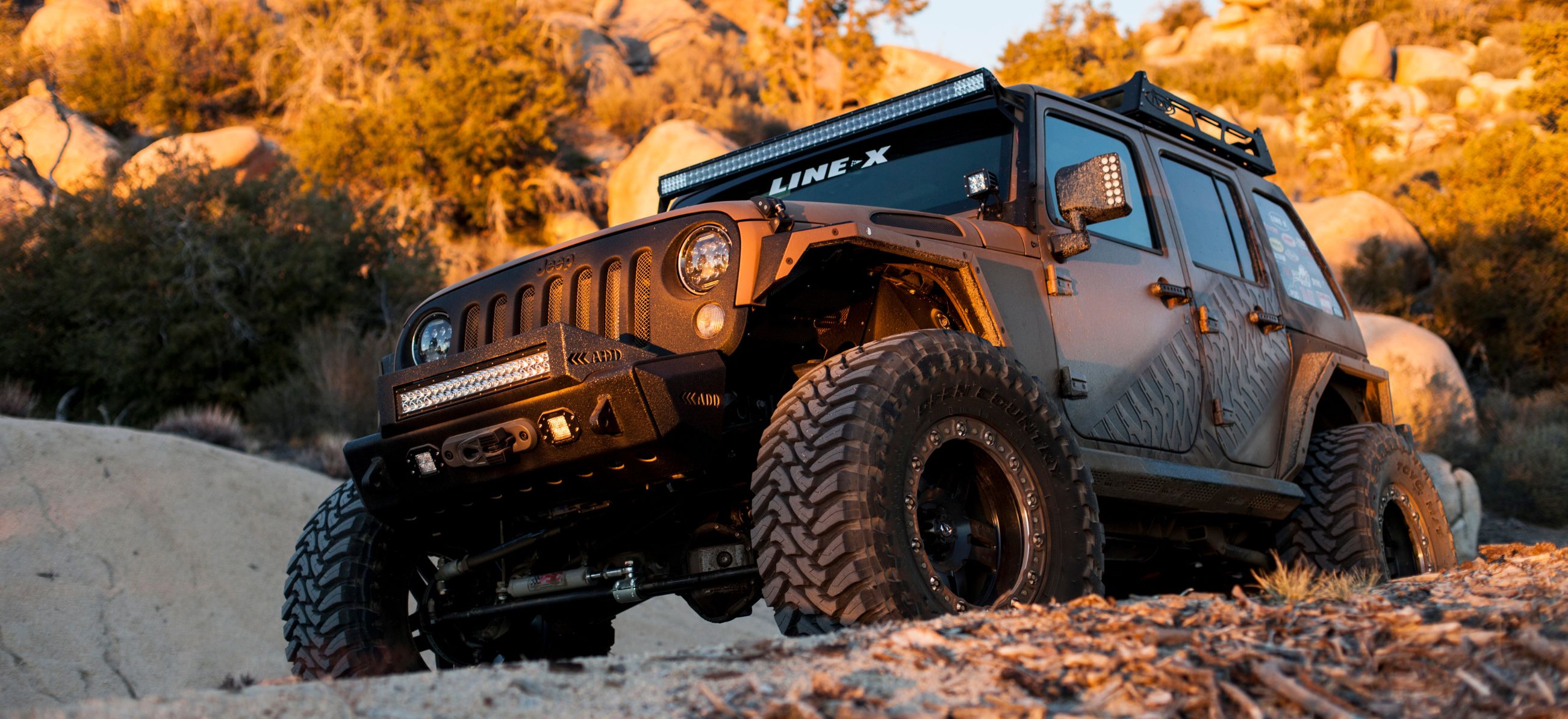
The most critical interface between your vehicle and the trail is the tire. Standard factory tires are designed primarily for highway efficiency and low noise, which often leaves them vulnerable when faced with sharp granite, protruding roots, or deep ruts. For the serious enthusiast, the priority shifts toward structural integrity. Tires featuring a high ply rating or reinforced sidewalls are essential. These heavy-duty constructions resist punctures and tears that would leave a standard street tire stranded. The visual impact of an aggressive sidewall is undeniable, but the functional benefit of deflection and grip in off-camber situations is where the real value lies.
Beyond sheer toughness, the modern adventurer faces a dilemma: specialized performance versus daily usability. While a dedicated mud-terrain tire offers exceptional evacuation of soft soil, it can be noisy and unpredictable on wet pavement. This has led to the rise of aggressive all-terrain hybrids. These tires bridge the gap, featuring deep sipes for wet weather traction on tarmac and interlocking tread blocks for loose surfaces. Selecting a tire that balances these needs ensures that the journey to the trailhead is as safe and comfortable as the crawl over the obstacles. It is about choosing a compound and tread pattern that matches the specific geology of your local trails while maintaining road manners for the commute home.
Elevating Stance and Suspension Geometry
To accommodate larger, more capable tires and to navigate over obstacles without grounding out, altering the vehicle's height is often necessary. However, simply installing spacers to lift the body is rarely sufficient for functional off-roading. A comprehensive suspension upgrade does more than just provide a commanding view of the road; it fundamentally changes how the vehicle interacts with the terrain. By increasing the distance between the chassis and the ground, you improve the approach, break-over, and departure angles, allowing the truck to climb steeper grades and crest sharper ridges without dragging the frame.
When modifying suspension, the goal is to maintain or increase wheel travel (articulation). A well-engineered system keeps the tires in contact with the ground on uneven surfaces, which is crucial for traction. If a wheel lifts into the air, it loses its ability to drive the vehicle forward. Therefore, quality damping and spring rates tuned for the added weight of gear and armor are vital. This ensures that the ride remains controlled over washboards and whoops, preventing the suspension from bottoming out or becoming dangerously unstable. It is a holistic approach where shock absorbers, control arms, and springs work in unison to handle the dynamic loads of off-grid exploration.
Fortifying the Exterior Against Impact
The First Line of Defense: Frontal Protection
When pushing through dense brush or approaching a vertical rock step, the front of the vehicle takes the brunt of the abuse. Replacing the factory plastic fascia with a fabricated steel or aluminum bumper is a transformative upgrade for both protection and utility. These aftermarket solutions are designed with "high clearance" wings that sweep up toward the fenders, exposing the front tires to allow them to grab onto obstacles rather than having the bumper act as a plow. This geometric advantage is often the difference between clearing a ledge and getting hung up.
Beyond geometry, these robust bumpers serve as a mounting platform for essential accessories. They provide a secure location for auxiliary lighting to illuminate pitch-black trails and, crucially, a rated mounting point for recovery operations. However, modern vehicles present a unique challenge: the integration of safety sensors. Advanced driver-assistance systems, such as adaptive cruise control radar and parking sensors, require bumpers that are engineered to accommodate these technologies without interference. A properly selected bumper enhances the vehicle's "armor" without compromising the electronic safety nets that protect the driver during highway travel.
| Feature | Factory Bumper | High-Clearance Aftermarket Bumper |
|---|---|---|
| Material | Plastic/Lightweight Metal | Hardened Steel or Aluminum Alloy |
| Approach Angle | Low (Designed for aerodynamics) | High (Designed for obstacle clearance) |
| Impact Resistance | Minimal (Cracks/deforms easily) | High (Deflects rocks and brush) |
| Recovery Points | Often absent or weak screw-in type | Welded D-Ring mounts/Winch cradle |
| Sensor Compatibility | Native | Requires specific design integration |
Underbody Shielding and Vital Component Care
While the bumper protects what you can see, the most catastrophic damage often occurs underneath the vehicle. The differential, transmission, and oil pan are dangerously exposed to hidden stumps and jagged rocks. Installing specialized armor plates is akin to putting a helmet on the vehicle's vital organs. A differential cover or glider protects the lowest point of the axle—the pumpkin—from peeling open upon impact. These guards are designed not just to absorb a hit, but to allow the vehicle to slide over the obstacle rather than catching on it.
Similarly, the transfer case and fuel tank require robust shielding. The choice of material here is a strategic decision. Steel offers maximum durability and creates a slick surface for sliding over rocks, but it adds significant weight. Aluminum offers a lighter alternative that will not rust, though it tends to gouge rather than slide. For suspension components like control arms, which are prone to damage from flying debris, bolt-on guards can prevent a bent linkage that would otherwise throw off alignment and leave the truck limping. Protecting these unseen areas provides the peace of mind needed to commit to difficult lines without the constant fear of leaving a trail of oil behind.
Self-Reliance and Recovery Systems
Mechanical Muscle: The Electric Winch
Even the most capable vehicles eventually encounter terrain that defies friction. In these moments, a winch transitions from an accessory to a lifeline. The standard for off-road trucks is an electric winch powered by the vehicle’s battery, capable of operating even if the engine has stalled—a distinct advantage over hydraulic systems in dead-engine situations. The rule of thumb for selecting capacity is to choose a unit rated for at least 1.5 times the gross loaded weight of the truck. This overhead ensures the motor pulls efficiently without overheating, even when the vehicle is mired in deep suction.
The evolution of winch lines has shifted preferences toward synthetic ropes over traditional steel cables. While steel is incredibly durable against abrasion, it stores lethal amounts of kinetic energy if it snaps. Synthetic rope, woven from high-tech fibers, is stronger by weight, floats on water, and carries significantly less risk during a failure. However, it requires careful maintenance to prevent UV degradation and internal abrasion from grit. Regardless of the line choice, the winch serves as the ultimate insurance policy, granting the independence to explore solo or the ability to act as the recovery asset for a convoy.
Kinetic Energy and Rigging Dynamics
A winch is useless without the proper rigging to connect it to an anchor. The modern recovery kit has moved away from heavy metal hardware toward "soft" solutions. Soft shackles, made from the same high-strength fiber as synthetic winch lines, have replaced heavy steel D-rings in many kits. They are lighter, float in mud, and eliminate the danger of a heavy metal projectile flying through the air if a connection point fails. Pairing these with a snatch block allows the driver to double the mechanical advantage of the winch or change the direction of the pull, navigating around corners or trees.
For situations where a winch isn't required but a tow is needed, the technology of the rope itself has changed. Old-school static tow straps are jarring and can damage vehicle frames. The superior alternative is the kinetic recovery rope. These ropes are designed to stretch up to 30% under load. When a recovery vehicle accelerates, the rope elongates, building up kinetic energy like a rubber band. As it contracts, it delivers a smooth, powerful pull that breaks the suction of mud or sand without the violent shock associated with static straps. Understanding the physics of these tools is as important as owning them; using a kinetic rope allows a lighter vehicle to recover a heavier one by utilizing momentum rather than just traction.
| Scenario | Static Tow Strap | Kinetic Recovery Rope |
|---|---|---|
| Primary Function | Towing a disabled vehicle on flat ground | Extracting a stuck vehicle using momentum |
| Elasticity | Low (Minimal stretch) | High (Stretches to store energy) |
| Shock Load | High (Jerky, potential frame damage) | Low (Smooth, progressive pull) |
| Vehicle Speed | Slow, steady crawl | Accelerated start (to build energy) |
| Best For | Road towing, tree trunk protectors | Deep mud, sand, snow extraction |
Breathing Clean Air in Hostile Environments
The Strategic Advantage of Elevated Intakes
Water crossings invoke a sense of classic adventure, but they pose an immediate threat to an internal combustion engine. Water does not compress; if it enters the cylinders through the air intake, the resulting hydraulic lock can destroy connecting rods and pistons instantly. A snorkel system relocates the engine's air intake from the wheel well or grille area to the roofline. This acts as a periscope for the engine, allowing the vehicle to ford streams where the water level might otherwise lap at the hood, securing the engine's respiration against the liquid threat.
However, the utility of a snorkel extends far beyond river crossings. For those traversing arid deserts or dry washboard roads, dust is the silent engine killer. The air near the wheel wells is a vortex of heavy particulate matter kicked up by the tires. By sourcing air from roof height, the intake captures cleaner, cooler air that carries significantly less dust. This cleaner airflow reduces the burden on the air filter, maintaining engine efficiency and fuel economy over long expeditions. Many systems also incorporate a pre-cleaner head that uses centrifugal force to spin dust and moisture out of the airstream before it even reaches the filter, further extending the service intervals of the vehicle in dusty conditions.
Q&A
-
What are the benefits of installing lift kits for trucks?
Lift kits for trucks provide several advantages, including increased ground clearance, which is essential for off-road driving. They also allow for larger tire installation, improving traction and stability on rough terrains. Additionally, lift kits can enhance the overall aesthetic appeal of a truck, giving it a more aggressive and commanding presence.
-
How do I choose the right off-road tires for my vehicle?
Selecting the right off-road tires involves considering factors such as terrain type, tire size, and tread pattern. For muddy conditions, a tire with deep, aggressive treads is ideal, while for rocky terrains, a sturdier sidewall is beneficial. It's also important to match the tire size with your vehicle's specifications and lift kit adjustments to ensure optimal performance and safety.
-
What is the purpose of a skid plate installation in off-road vehicles?
Skid plates are crucial for protecting the underside of off-road vehicles from damage caused by rocks, debris, and uneven surfaces. They act as a shield for vital components such as the oil pan, fuel tank, and transmission, preventing costly repairs and extending the vehicle's lifespan during off-road adventures.
-
Why is winch and recovery gear essential for off-road driving?
Winch and recovery gear are vital for off-road driving as they provide a means of self-recovery when a vehicle gets stuck. A winch can pull the vehicle out of difficult situations like mud or sand, while additional recovery gear such as straps, shackles, and recovery boards aid in freeing a stuck vehicle, ensuring safety and minimizing downtime during excursions.
-
How do snorkel kits benefit trucks used in off-road conditions?
Snorkel kits elevate the air intake of a truck, allowing it to ford deeper waters without risking engine damage. This is particularly beneficial in off-road conditions where rivers or flooded areas might be encountered. Snorkels also help in maintaining clean air intake by reducing the amount of dust and debris entering the engine, thus improving performance and longevity.
-
What are locking differentials and why are they important for off-road vehicles?
Locking differentials are a critical component for off-road vehicles as they ensure power is evenly distributed to all wheels, regardless of traction. This is particularly useful when one or more wheels are off the ground or on a slippery surface, as it prevents the loss of traction and maintains forward momentum, enhancing the vehicle's capability to tackle challenging terrains.