
Understanding the Financial Impact of Distance Limits
The Mechanics of Lease Agreements and Residual Value
When entering into a vehicle lease, the stipulated annual distance limit is arguably the most critical figure to scrutinize. Typically, agreements in English-speaking regions set this cap between 10,000 and 12,000 miles per year. This number is not arbitrary; it is carefully calculated to preserve the vehicle’s "residual value"—the estimated worth of the car at the end of the contract. While the experience of driving a leased car feels identical to driving one you own, the legal reality is that you are essentially renting the depreciation of the asset. Because mileage is a primary driver of depreciation, financial institutions enforce these limits strictly to ensure the asset retains its projected value upon return.
If a driver exceeds this pre-determined cap, the financial repercussions are immediate and mathematical. Most contracts include a specific clause detailing a per-mile penalty fee. While a charge of 15 or 25 cents per mile might seem negligible in isolation, the cumulative effect can be staggering. For example, overshooting your limit by 5,000 miles could result in a bill equivalent to several months of lease payments due immediately upon turning in the keys. This is often referred to as a "disposition fee" or simply an overage charge. It is vital to understand that this fee effectively negates the primary benefit of leasing: lower monthly payments compared to financing. Therefore, treating the odometer reading with the same level of scrutiny as your bank balance is a necessary discipline for any lessee.
Accurate Pre-Lease Assessment and Buffers
One of the most common pitfalls for consumers is the tendency to underestimate their actual driving habits. When negotiating a contract, it is easy to calculate a simple daily commute and assume the standard 10,000-mile allowance will suffice. However, this calculation often overlooks the "hidden miles" of life: weekend errands, social visits, holiday road trips, and unexpected detours. A driver who strictly calculates work-to-home distances will almost invariably find themselves nearing the cap months before the contract expires. This situation creates unnecessary stress and forces the driver to either park the car or face penalties.
To mitigate this risk, a thorough lifestyle audit is required before signing any documents. Prospective lessees should analyze their driving history from previous years if possible. Furthermore, it is a sound financial strategy to build a "mileage buffer" into the contract. Negotiating for a higher limit—say, 15,000 miles instead of 12,000—will increase the monthly payment slightly because the car's residual value will be lower. However, this upfront cost is almost always cheaper than the punitive per-mile penalty charged at the end of the lease. Paying for the miles in the monthly premium is a controlled cost, whereas paying penalties is an uncontrolled expense. Thinking ahead about potential life changes, such as a new job further from home or a move to the suburbs, is also essential.
Leveraging Technology for Active Monitoring
Digital Cockpits and Connectivity Features
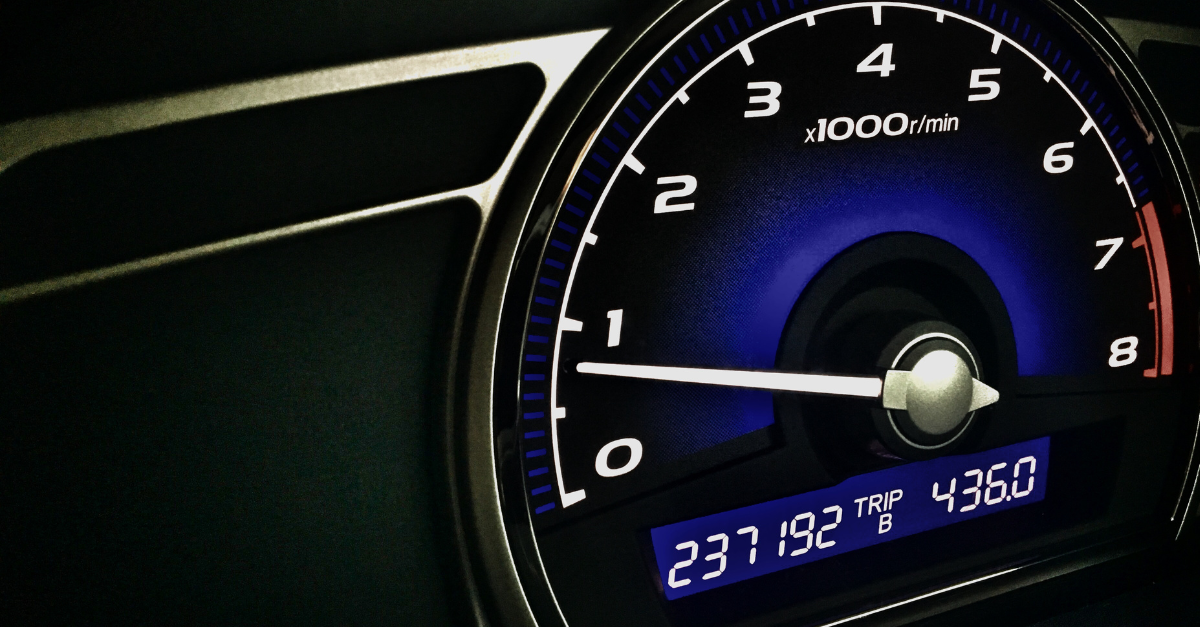
Modern vehicles, particularly those in the SUV and luxury segments often leased by families and professionals, have transformed the dashboard into a sophisticated data center. The digital cockpit is no longer just for displaying speed; it is a powerful tool for contract compliance. Drivers should take full advantage of customizable instrument clusters to keep mileage front and center. Rather than burying the odometer in a sub-menu, configuring the display to show the "Trip A" counter reset monthly or the total odometer reading prominently can create a subconscious awareness of usage.
Beyond the dashboard, smartphone integration offers a proactive way to manage distance. Many contemporary infotainment systems sync wirelessly with phones, providing real-time traffic and navigation data. Drivers can utilize navigation apps not just for directions, but for distance optimization. Before departing, comparing route options can reveal significant differences; a route that is five minutes faster might be ten miles longer. Over the course of a year, consistently choosing the shorter distance over the faster time can save hundreds of miles. Additionally, avoiding "aimless driving" by grouping errands into a single trip—a practice known as trip chaining—is highly effective. Using the car's native tech to plan these routes ensures that every mile consumed serves a purpose, preventing the wasteful accumulation of distance that leads to end-of-term anxiety.
External Apps and Routine Maintenance Checks
While on-board systems are useful, relying on external tracking methods adds a layer of redundancy and precision to your management strategy. There are numerous third-party applications available that are designed specifically to track vehicular expenses and usage. Some apps automate this process by detecting when the phone is moving at driving speeds, while others allow for manual entry at the pump. Creating a habit of logging the odometer reading every time you refuel or charge the vehicle provides consistent data points. This practice allows you to spot trends early; if you notice in June that you have already used 60% of your annual allowance, you can adjust your driving behavior for the second half of the year.
Regular maintenance appointments also serve as excellent official benchmarks. Service records provide a verified timeline of vehicle usage. By cross-referencing your personal logs with service records, you can audit your own usage pace. This is also the right time to evaluate the condition of the vehicle, as lease returns require the car to be in good shape beyond just the odometer reading. Keeping tires properly inflated and the engine tuned not only ensures the car runs efficiently but also prevents mechanical issues that could be exacerbated by high mileage. The goal is to turn mileage monitoring from a source of anxiety into a routine administrative task, much like paying a utility bill.
| Monitoring Method | Primary Advantage | Best Suited For |
|---|---|---|
| Dashboard Trip Meter | Zero cost, always visible while driving. | Drivers who want a simple, daily visual reminder without technology. |
| Connected Car App | Automatic syncing with the vehicle's computer. | Tech-savvy users who want precise data directly from the manufacturer. |
| Fuel Log/Maintenance App | Combines mileage tracking with expense management. | Budget-conscious drivers tracking total cost of ownership. |
| Manual Spreadsheet | Fully customizable analysis and forecasting. | Detailed planners who want to project future usage scenarios. |
Strategic Maneuvers for High-Distance Needs
The Logistics of Vehicle Transport Services
There are scenarios where a lessee must relocate physically but cannot afford the mileage hit of driving the car to the new location. For instance, a temporary job reassignment across the country or a permanent move several states away can involve a drive of 2,000 to 3,000 miles. On a tight lease agreement, a single cross-country trip could consume 25% of the annual allowance in a matter of days. In such cases, driving the car yourself is often mathematically unsound.
Auto transport services, or car shipping, present a viable solution. By loading the leased vehicle onto a carrier, it can be moved thousands of miles without adding a single digit to the odometer. While there is an upfront cost for shipping, one must compare it against the total cost of driving: fuel, hotels, meals, potential tire wear, and most importantly, the lease penalty fees for those miles. Often, shipping is cost-neutral or even cheaper when the penalty fees are factored in. However, it is crucial to review the lease contract before arranging transport. Some leasing companies have specific clauses regarding the movement of the asset across state lines or borders. Ensuring the vehicle is documented and photographed before shipping also protects against damage claims, ensuring the car remains in "lease-return ready" condition upon arrival.
Evaluating High-Volume Plans versus Ownership
For some drivers, the standard constraints of a lease are simply incompatible with their reality. If your commute involves 50 miles each way, or if your profession requires constant travel, a standard lease is a setup for failure. However, this does not automatically mean you must buy. "High-mileage leases" are specialized products offered by many manufacturers and finance companies. These agreements allow for caps of 15,000, 18,000, or even 20,000 miles per year. The trade-off is a higher monthly payment, as the depreciation is accelerated, but it provides the convenience of a lease cycle without the looming threat of penalties.
Conversely, there is a break-even point where leasing ceases to make financial sense. If you consistently drive over 20,000 miles annually, financing the vehicle to own it is generally the wiser path. Ownership eliminates the concept of "overage" entirely. You pay for the car's depreciation through the lower resale value when you eventually sell it, but you are not writing a check for penalties to a dealership. Understanding where you fall on the spectrum of usage—low, standard, or high—allows you to choose the financial instrument that serves your needs, rather than bending your life to fit a contract.
| Feature | Standard Lease | High-Mileage Lease | Financing / Purchasing |
|---|---|---|---|
| Annual Limit | Typically 10k - 12k miles. | Up to 18k - 20k miles (negotiable). | Unlimited. |
| Monthly Cost | Lowest relative cost. | Moderate (Pre-pays for extra depreciation). | Highest (building equity). |
| End of Term Risk | High penalty risk if managed poorly. | Low risk if estimated correctly. | No penalty risk; market value risk only. |
| Flexibility | Low; locked into specific usage. | Moderate; higher buffer provided. | High; drive as much as needed. |
Q&A
-
What are excess mileage fees in a car lease, and how can they be avoided?
Excess mileage fees are charges incurred when a lessee drives more miles than the agreed-upon limit in their car lease contract. To avoid these fees, lessees can negotiate a higher mileage cap at the start of the lease, often at a slightly higher monthly payment. Alternatively, they can monitor their mileage regularly and adjust their driving habits to stay within the limits.
-
What is mileage overage protection for a car lease, and how does it work?
Mileage overage protection is an add-on service offered by some leasing companies that allows lessees to purchase additional miles at a lower rate than the standard excess mileage fees. This protection can be bought upfront or during the lease term, providing a financial safety net for those who anticipate driving more than initially planned.
-
What are high-mileage car lease options, and who should consider them?
High-mileage car lease options are tailored leasing plans that offer higher mileage limits than standard leases, typically ranging from 15,000 to 30,000 miles per year. These options are ideal for individuals who drive extensively for work or personal reasons and want to avoid excess mileage charges. It allows lessees the flexibility to use the vehicle without the stress of exceeding mileage caps.
-
How can car mileage tracking tools assist in planning and managing a car lease?
Car mileage tracking tools, such as mobile apps or built-in vehicle systems, help lessees monitor their mileage usage in real-time. These tools provide insights into driving patterns, allowing individuals to plan their trips more efficiently and ensure they remain within their lease's mileage limits. This proactive approach can help avoid unexpected excess mileage fees and make informed decisions about future leases.
-
Why is it important to plan car lease mileage and adjust mileage caps accordingly?
Planning car lease mileage is crucial to avoid unexpected costs and align the lease with actual driving needs. By accurately estimating annual mileage and adjusting the mileage caps at the start of the lease, lessees can tailor their contracts to match their driving habits, potentially saving money and ensuring a smoother leasing experience. This foresight helps in avoiding penalties and makes budgeting more predictable.