
Assessing Structural Resilience Beyond the Sticker
The Reality of Laboratory Scores vs. Road Aging
When browsing the market for a pre-owned vehicle, the initial safety score—often a star rating or a numerical index—is usually the first metric buyers consult. These ratings are undeniably valuable; they represent how a vehicle performed in a high-stress, controlled laboratory environment at the time of its manufacturing. Engineers utilize standardized protocols, crashing vehicles into barriers at specific speeds and angles to measure the potential trauma to sensor-laden dummies. For a used car buyer, a high score from five or seven years ago indicates that the foundational engineering was sound and that the manufacturer prioritized energy absorption and cabin integrity during the design phase.
However, it is crucial to recognize that these scores are snapshots in time. A vehicle that achieved top-tier status half a decade ago might not meet the more stringent criteria of today’s testing protocols, which now often include difficult overlap tests and stricter side-impact assessments. Furthermore, the laboratory cannot simulate the "aging" of safety. Over years of operation, a vehicle is subjected to environmental stressors—road salt, humidity, and temperature fluctuations—that can degrade materials. The pristine steel structure that earned five stars on the assembly line may now be battling hidden corrosion. Therefore, while the original rating is a solid baseline for research, it must be contextualized. It tells you the potential of the design, but it does not guarantee the current capability of the specific unit sitting on the dealership lot. Buyers must shift their mindset from trusting the "sticker" implicitly to verifying that the vehicle has been maintained well enough to uphold that original promise of protection.
Inspecting the "Bones": Why Frame Condition Matters
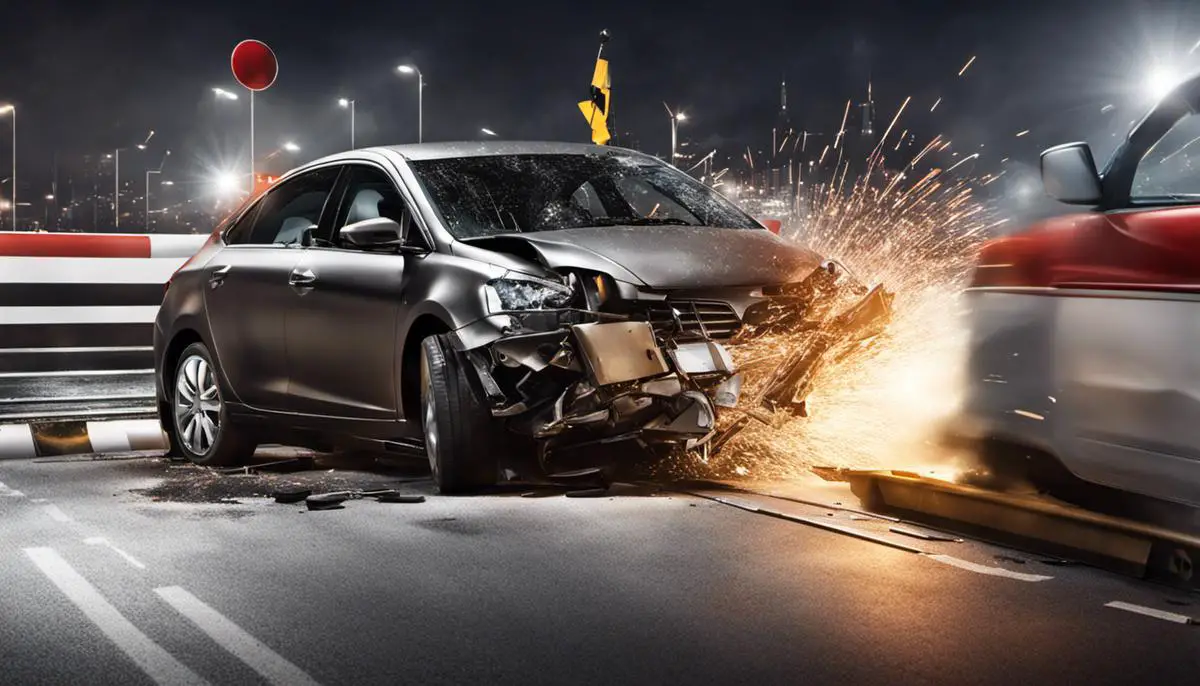
The most critical aspect of a used vehicle’s ability to protect its occupants lies beneath the glossy paint and polished interior: the frame. In modern automotive engineering, the chassis is designed with sophisticated crumple zones. These are specific areas intended to deform sacrificially during a collision, absorbing the kinetic energy of the impact so that the force is not transferred to the human occupants inside the cabin. This energy management is the core of crashworthiness. However, this system relies entirely on the structural integrity of the metal.
If a vehicle has a history of accidents, even if they seem minor on paper, the frame may have been compromised. Cosmetic repairs can easily hide structural damage; a new bumper cover or a repainted fender can mask a frame rail that has been bent and imperfectly straightened. Engineering data suggests that metal structure, once deformed and repaired, often loses a significant percentage of its original energy-absorption capability—sometimes up to 30%. This means that in a second accident, the "bones" of the car may not crumple as designed, or worse, they may buckle into the passenger compartment.
| Inspection Area | Warning Signs of Compromised Structure | Potential Safety Risk |
|---|---|---|
| Panel Gaps | Uneven spacing between the hood, trunk, or doors and the body. | Indicates body twist or poor frame alignment, reducing crash resistance. |
| Underbody | Fresh undercoating on older cars or clamp marks on the frame rails. | often hides welding repairs or rust that weakens the crumple zones. |
| Welds | Irregular, non-factory weld marks in the trunk or engine bay. | Suggests major structural splicing (clipping), compromising rigidity. |
| Paint Texture | "Orange peel" texture or slight color mismatch on pillars. | Signs of extensive bodywork that may cover deeper structural trauma. |
Understanding this risk transforms how one inspects a potential purchase. It is not enough to look for scratches; one must look for signs of trauma to the skeleton of the car. A professional pre-purchase inspection that specifically targets structural analysis is often the only way to ensure that the vehicle’s "bones" are still capable of performing their life-saving duty.
The Evolution of Onboard Defense Systems
Lighting the Way: Lens Clarity and Beam Precision
In the realm of safety features, headlights are frequently undervalued compared to airbags or braking systems, yet they are the primary preventative measure for night driving. On the used car market, the condition of the headlight assembly is a significant variable that directly impacts safety. Most modern vehicles use polycarbonate plastic lenses which, while durable against impact, are highly susceptible to UV degradation and oxidation. Over time, these lenses turn yellow, cloudy, or opaque. This is not merely a cosmetic issue; a hazy lens acts as a diffuser, scattering the light beam rather than focusing it on the road ahead.
The degradation of lens clarity can reduce light output by more than 50% in severe cases. This reduction severely hampers a driver’s reaction time, as obstacles, pedestrians, or animals become visible seconds later than they would with clear lenses. Furthermore, the scattering effect can create glare for oncoming traffic, creating a hazardous environment for everyone on the road. When evaluating a used car, checking the transparency of the lens is step one. However, equally important is the alignment of the beam, known as the optical axis.
Years of vibrations, potholes, and minor bumper taps can knock headlights out of alignment. If the beams point too low, your visibility distance is cut short; if they point too high, you blind other drivers and fail to illuminate the road surface. High-intensity discharge (HID) or LED systems, common in premium used cars, are fantastic for visibility but can be expensive to repair if the self-leveling motors fail. Therefore, checking that the lights perform a proper "sweep" upon startup and project a sharp cutoff line on a wall is a mandatory part of the test drive. It ensures that the vehicle can effectively communicate visual information to the driver in low-light conditions.
Evaluating Active Prevention Systems on a Budget
As advanced driver-assistance systems (ADAS) trickle down into the affordable used car market, buyers now have access to technologies like automatic emergency braking, lane-keeping assist, and blind-spot monitoring in vehicles that are several years old. These features represent a massive leap forward in collision avoidance. However, purchasing a used vehicle equipped with these systems requires a different level of scrutiny compared to buying a new one. In a new car, these systems are factory-calibrated and pristine. In a used car, their reliability depends heavily on the vehicle's history.
Sensors usually reside in vulnerable locations—behind the front emblem, in the bumper, or behind the windshield glass. If a windshield has been replaced with non-OEM glass, or if a bumper has been repainted or repaired with excessive filler, the sensors may no longer function correctly. A camera looking through distorted glass may fail to identify a pedestrian, or a radar sensor covered by a thick layer of metallic paint might not detect a stopped car ahead.
When testing a used car with these "active" safety features, it is vital to verify they are operational. Check the dashboard for any warning lights related to the system (often labeled as "Radar Malfunction" or "Camera Unavailable"). If safe to do so during a test drive, verify that features like blind-spot monitoring actually light up when a car passes. Unlike mechanical parts like brake pads which wear down visibly, electronic safety systems either work or they don't, and diagnosing intermittent faults can be a nightmare. Ensuring these systems are functioning ensures you are actually getting the extra layer of protection you are paying for, rather than just a dashboard full of expensive, non-functional buttons.
Material Science and Passenger Placement
Don't Forget the Back Row: Secondary Passenger Protection
For families, the safety of the rear seat is often the deciding factor in a purchase, yet it is an area where manufacturers have historically lagged behind front-seat innovations. In many vehicles from the past decade, the front occupants enjoy the full suite of pretensioners, load limiters, and multi-stage airbags, while the rear passengers—often children or elderly relatives—receive more basic protection. When evaluating a used car for family duty, digging into the specific safety tech of the second row is essential.
Recent crash testing updates have highlighted discrepancies in rear-seat safety, prompting manufacturers to improve. However, in the used market, you will find a mix of varying standards. Key features to look for include side-curtain airbags that extend all the way to the C-pillar (protecting the heads of rear passengers), and more importantly, seatbelt pretensioners and load limiters for the rear outboard seats. A pretensioner tightens the belt instantly upon impact to hold the passenger in place, while a load limiter releases a small amount of slack to prevent the belt itself from causing chest injuries.
Many older models lack these rear-seat sophistications. Additionally, verify the presence and accessibility of LATCH (Lower Anchors and Tethers for Children) systems. In some used cars, these anchors are buried deep within the seat foam, making secure car seat installation difficult. A difficult installation often leads to improper usage, which drastically reduces safety. Prioritizing a vehicle that democratizes safety tech across all rows ensures that the most vulnerable passengers are not left with second-tier protection.
Q&A
-
What are Occupant Protection Ratings and why are they important?
Occupant Protection Ratings are assessments given to vehicles based on how well they protect passengers during a crash. These ratings are crucial as they provide consumers with information on the safety level of a vehicle, helping them make informed decisions when purchasing a car. They consider factors like crashworthiness and the effectiveness of safety features.
-
How does Safety Feature Availability impact a vehicle's overall safety?
Safety Feature Availability refers to the presence of advanced safety technologies in a vehicle, such as automatic emergency braking or lane-keeping assistance. The availability of these features can significantly enhance a vehicle's safety by preventing accidents or reducing the severity of collisions, thus contributing to higher safety ratings.
-
What is Frontal Crash Overlap, and how does it affect crash test results?
Frontal Crash Overlap tests evaluate how a vehicle performs when the front corner collides with another object or vehicle. This type of crash simulation is important because it reflects real-world accident scenarios and helps determine how well the vehicle can protect its occupants in such crashes. A good performance in these tests is indicative of a robust safety design.
-
What are Headlight Performance Tiers, and how do they influence driving safety?
Headlight Performance Tiers categorize vehicles based on the effectiveness of their headlights in providing adequate road illumination under various conditions. Good headlight performance is crucial for night-time and low-visibility driving, reducing the risk of accidents by improving the driver's ability to see pedestrians, obstacles, and road signs.
-
How does Vehicle Weight-to-Safety Correlation affect vehicle safety assessments?
The Vehicle Weight-to-Safety Correlation explores the relationship between a vehicle's weight and its safety performance. Generally, heavier vehicles tend to offer better protection in collisions due to their mass, which can absorb more impact energy. However, advancements in engineering have allowed lighter vehicles to achieve similar safety levels through the use of high-strength materials and advanced safety features.